
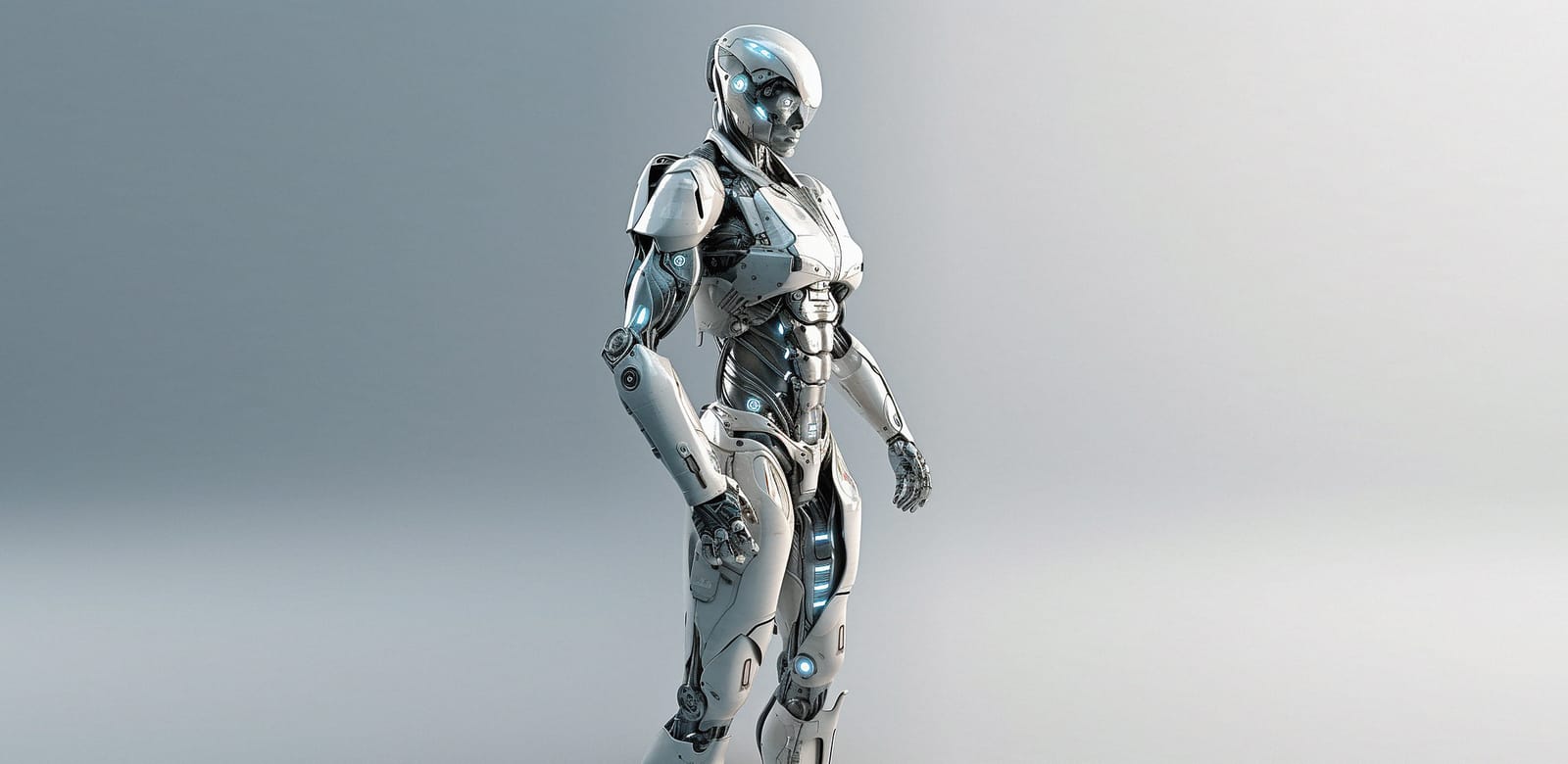
No, this is not the title of a sci-fi story. Recent advancements in technology have made the concept of humanoid robots replacing some work roles a reality.
Technological developments in this field are gathering pace and have evolved dramatically since the first days of the industrial revolution. Today, business owners want robotics to do more than automate a manufacturing process on a factory floor.
Figure AI, a forward thinking American company, is one of the pioneers of the humanoid robot. Tesla’s Optimus is another innovation pursuing the development of humanoid robots with the potential to change how we live and work. However, in doing so such companies have sparked discussions about the impact of humanoid robots on the job market and society as a whole.
Why humanoid robots
The need for greater dexterity and range of function has driven the design of robots to take a more human shape. Also the integration of robots into a wider range of industries, where the human form might be appreciated, has had an impact on design.
From manufacturing and logistics to healthcare and customer service, robots are being deployed to perform a wide range of tasks. For example, in the healthcare sector, robots are being utilised to assist with patient care, medication management, and even surgical procedures.
As robotics continue to advance, there will be a notable shift in the roles and tasks that are being undertaken by machines. This not only includes repetitive tasks on production lines but routine maintenance and inspections, and even certain customer service interactions. With the integration of robotics with AI, organisations will be able to change their approach to delivering a wide range of services than was previously possible.
The benefits to the employer are clear but the human workforce may not welcome the technological developments so happily. So what will the likely impact be on the existing workforce.
What does that mean for me?
The background
If you start this conversation by considering our history we all know that robotics is nothing new in the workplace. The mechanisation of mundane tasks dates back over a century. The industrial revolution brought changes to business, especially within the field of manufacturing. While everything from the humble vacuum cleaner to the bean to cup coffee machine has revolutionised our everyday.
Unsurprisingly, when first introduced, the machinery that made the production line more efficient was not welcomed by the workforce. The jobs that would have otherwise been carried out by hand were now being carried out more quickly and cheaply by a machine, and employees felt threatened.
Those who could adapt became the machine operators, the quality controllers and the mechanics. Those who couldn’t had to look elsewhere for work or suffer the consequence of unemployment. Back in the day there was no government support for those out of work. That meant those who feared the changes brought about by the industrial revolution had good reason.
The present
Today, the outlook is less bleak. Government and local councils offer training programmes to support those wanting to upskill or seek work in a new field. Depending on how long an employee has worked for an employer, redundancy may be a welcome option with a sizeable severance package. As robotics and AI continue to carry out jobs that were previously the domain of a human workforce, government will introduce more opportunities for those affected.
Employers do and will continue to also offer support and training for employees affected by the wider integration of robotics and AI. Considering the level of skills and knowledge a human worker will have gained, anyone with the interest and aptitude to adapt will be valuable to employers.
There has been some discussion about the possibility of a universal basic income to replace the income lost through technological advancements. Although its probably too soon just yet to see a universal basic income implemented on a countrywide basis. In 2016 there was a Swiss referendum on the proposal to introduce such a scheme. This proposal involved making regular basic income payments to all citizens, irrespective of their circumstances. The Swiss overwhelmingly voted against the idea.
As more and more employees are displaced by technology the question of a universal basic income will arise again. Perhaps generated from a business tax on those companies benefiting from the cost and efficiency savings robotics and AI offer. Elon Musk, a pioneer of humanoid robotics advocates for the idea.
The benefits of the technological change for workers
The introduction of humanoid robots in the workplace will lead to greater workplace safety. In certain industries, such as construction, the list of potential health risks is lengthy. There is a need to rely on the proper training and adherence to health and safety regulations to keep workers safe. The introduction of robotics across more areas of work enables employers to keep risks to human life to a minimum.
Work that has traditionally demanded a level of physical strength will be undertaken by robots. This will reduce physical strain on workers.
The greatest benefit of humanoid robotics in the workplace has to be the new opportunities the technology offers. Humanoid robots are more likely to be involved in the mundane and physically demanding aspects of work in the early days. This would mean the workforce could be deployed in new and more interesting roles.
And finally…
The future of humanoid robots is not just for those interested in robotics engineering, programming, and system integration. There will be a range of opportunities that will fit the existing human workforce if they are willing to adapt. Significant change in business doesn’t happen in isolation, but is usually accompanied by government initiatives and employer programmes. And the technological revolution we are in the throws of is not an insignificant change.
For employers, the integration of robotics brings about undeniable benefits in terms of efficiency and innovation. There is a conversation to be had between business and government to understand how to manage the change. It is in the interests of everyone to ensure nobody is left behind.